If you’ve ever opened your dishwasher to find cloudy glasses or water spots on dishes, you’re not alone. This is exactly where dishwasher rinse aid makes a difference. Designed to improve drying performance and eliminate residue, rinse aid is a simple addition that can dramatically upgrade your dishwashing results.
Unlike detergent, which removes food and grease, rinse aid works during the final rinse cycle to help water slide off dishes more effectively. The result? Spot-free glassware, faster drying, and a cleaner finish overall.
In this article, we’ll cover:
What is a Dishwasher Rinse Aid?
A rinse aid for dishwasher use is a liquid solution formulated to reduce water surface tension. This allows water to sheet off dishes instead of forming droplets that leave spots or streaks behind.
Most rinse aids contain:
- Surfactants to break surface tension
- Drying agents to speed up evaporation
- Anti-spotting agents to prevent mineral residue
It’s especially useful in areas with hard water, where minerals like calcium can leave visible marks on dishes and glassware.
How Does Rinse Aid Work?
If you’re wondering what rinse aid does, it works by changing how water behaves during the final rinse cycle. Instead of forming droplets that cling to dishes and dry into spots, rinse aid reduces the water’s surface tension, allowing it to sheet off smoothly. This helps prevent mineral deposits, improves drying performance, and leaves dishes, especially glassware, looking clearer, shinier, and completely streak-free.
The Benefits of Using a Rinse Aid
Using a dishwasher rinse aid consistently offers several noticeable benefits:
-
Spot-free dishes and glassware
Eliminates cloudy residue and water spots, especially on glasses -
Faster drying times
Less water left behind means dishes dry more efficiently -
Improved shine
Leaves dishes looking polished and streak-free -
Better performance in hard water areas
Reduces mineral buildup and residue -
Prevents long-term buildup
Helps maintain your dishwasher’s interior cleanliness
How to Use Rinse Aid in Your Dishwasher
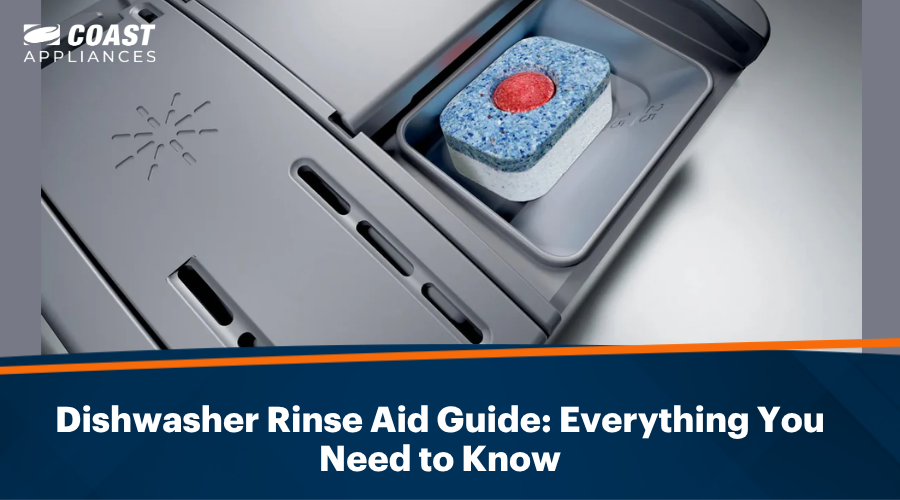
Not sure how to use rinse aid? The process is quick and straightforward and once set up, your dishwasher takes care of the rest. Simply locate the rinse aid dispenser (usually on the inside of the door), open the cap, and fill it to the indicated level. If your machine allows it, adjust the setting based on your water hardness to get the best results, then close the cap securely and run your dishwasher as usual.
Most dishwashers automatically release rinse aid during the final rinse cycle, so there’s no need to add it every time. Depending on how often you use your appliance, you’ll typically only need to refill it every few weeks.
Choosing the Best Dishwasher Rinse Aid
When selecting the best dishwasher rinse aid, consider your water type, dishwasher model, and performance needs.
| Type | Best For | Key Benefits |
| Standard rinse aid | Everyday use | Improves drying and reduces spotting |
| Hard water formula | Mineral-heavy water | Prevents limescale and residue |
| Eco-friendly rinse aid | Sustainable households | Biodegradable ingredients |
| Premium formulas | High-end dishwashers | Enhanced shine and faster drying |
If you live in a hard water area, choosing a specialized formula can significantly improve results.
Troubleshooting Common Rinse Aid Issues
When your dishwasher rinse aid dispenser isn’t working properly or you’re not seeing improved results, ere are some common issues to check:
-
Dispenser clogged
Clean it regularly to ensure proper flow -
Overfilling rinse aid
Can cause streaking or residue -
Incorrect dispenser setting
Adjust based on water hardness -
Low or empty rinse aid
Refill if indicator light is on -
Poor dishwasher maintenance
Clean filters and spray arms regularly
Final Tip
Using a dishwasher rinse aid is one of the easiest ways to improve your dishwasher’s performance. From faster drying to spotless dishes, it’s a small addition that delivers noticeable results. Combined with proper loading, regular cleaning, and the right detergent, rinse aid helps keep your kitchen running efficiently and your dishes looking their best.
Looking for a Dishwasher? Before you head out to buy your shiny new unit with all the bells and whistles, read this dishwasher buying guide to learn everything you need to know about your next dishwasher.
Dishwasher Rinse Aid Guide - Frequently Asked Questions
Is rinse aid necessary for all types of dishwashers?
Not mandatory, but highly recommended for better drying and spot-free results—especially in hard water areas.
What does rinse aid do for glasses and delicate dishes?
It prevents streaks and cloudiness, helping glassware stay clear and shiny.
Can I use vinegar as a rinse aid in my dishwasher?
Yes, but only as a temporary solution. Long-term use may affect seals and components.
How often should I refill my dishwasher rinse aid dispenser?
Typically every 3–4 weeks, depending on usage and settings.
How do I know if my dishwasher rinse aid dispenser is not working?
Look for persistent water spots, poor drying, or no change after refilling.