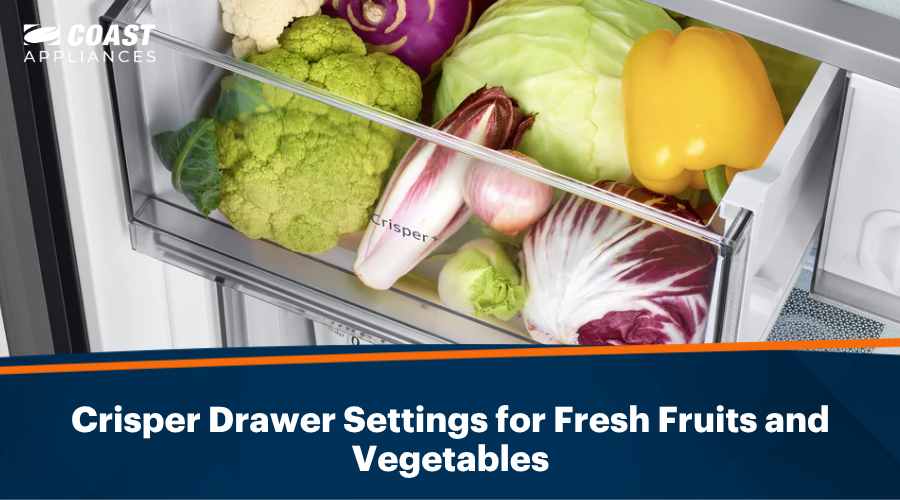
Keeping fruits and vegetables fresh for longer doesn’t just depend on buying quality produce, it also comes down to using your fridge correctly. Understanding crisper drawer settings is one of the simplest ways to reduce food waste, maintain flavour, and extend shelf life.
Modern refrigerators are designed with humidity-controlled drawers that create the ideal environment for different types of produce. In this guide, you’ll learn how to adjust fridge crisper settings, organize your drawers effectively, and avoid common mistakes that can cause spoilage.
In this article, we’ll cover:
Crisper Humidity Settings
Understanding humidity for vegetables in the fridge is one of the most important factors in keeping your produce fresh. Crisper drawers are designed to control airflow, which directly impacts moisture levels. When used correctly, they can significantly extend the life of your fruits and vegetables.
In simple terms, high humidity keeps moisture in, while low humidity allows air to circulate and moisture to escape. This balance helps prevent either wilting or premature spoilage, depending on what you're storing.
High humidity (closed vent) is ideal for produce that tends to lose moisture quickly. This includes:
- Leafy greens like spinach and lettuce
- Vegetables such as broccoli and carrots
- Items that wilt easily and need a moist environment
Low humidity (open vent) works best for fruits that release ethylene gas, which speeds up ripening. These include:
- Apples and oranges
- Bell peppers
- Other fruits that benefit from airflow to slow spoilage
Recommended Humidity Settings for Common Produce
| Produce | Setting | Notes |
| Spinach / Lettuce | High | Prevents wilting |
| Broccoli | High | Yes, it needs refrigeration |
| Carrots | High | Prevents soft texture |
| Bell Peppers | Low | Yes, should be refrigerated |
| Apples | Low | Keep away from veggies |
| Oranges | Low | Can be refrigerated for longer shelf life |
| Cauliflower | High | Needs refrigeration |
| Grapes | High | Keep sealed to retain moisture |
Organizing Your Crisper Drawer
Best Practices for Arrangement and Separation
To organize your crisper drawers effectively:
- Separate fruits and vegetables into different drawers
- Keep ethylene-producing fruits away from sensitive produce
- Group similar items together for stable conditions
- Use breathable bags or containers when needed
- Label drawers if multiple people use the fridge
Can apples and oranges be stored together? Yes, but they should always be kept away from vegetables to avoid early spoilage.
Tips on Avoiding Overcrowding
Overcrowding is one of the most common mistakes when using crisper drawers. When items are packed too tightly, airflow is restricted, and humidity levels become uneven, leading to faster spoilage.
To keep your drawers functioning properly:
- Leave space between items for air circulation
- Avoid stacking produce too tightly
- Rotate older items to the front
- Clean drawers regularly to maintain hygiene
A well-organized drawer doesn’t just look better, it performs better, helping your produce last longer.
Common Mistakes to Avoid
Improper Humidity Settings for Specific Produce
| Mistake | Result |
| Using low humidity for leafy greens | Wilting and drying |
| Using high humidity for fruits | Faster spoilage |
| Mixing fruits and vegetables | Ethylene damage |
| Ignoring airflow | Uneven cooling |
Food-Specific Tips
Some types of produce require a bit more attention when it comes to storage. Small adjustments can make a big difference in how long they stay fresh.
-
How long can lettuce stay out of the fridge?
Only a few hours before it begins to wilt -
Why do carrots go soft in the fridge?
Low humidity causes them to lose moisture -
Should bell peppers be refrigerated?
Yes, and they should be stored in low humidity -
Do oranges need to be refrigerated?
Not necessarily, but refrigeration helps extend freshness
Find Your Ideal Refrigerator
Browse our full selection of refrigerators today.
Crisper Drawer Settings for Fruits and Vegetables – FAQs
How long are oranges good for in the fridge?
Oranges can last up to 3–4 weeks when stored in a low humidity drawer.
Do oranges need to be refrigerated?
They don’t have to be, but refrigeration helps extend their shelf life and maintain freshness.
How to freeze vegetables chart?
Most vegetables should be blanched before freezing. Options like broccoli, carrots, and leafy greens freeze well when prepared properly.
Vegetables freezing in refrigerator drawer—why does it happen?
This usually happens when the fridge temperature is set too low or produce is placed too close to cooling vents.
Crisper humidity settings: when to adjust?
Adjust based on what you’re storing. Switch between high and low humidity as your produce changes.