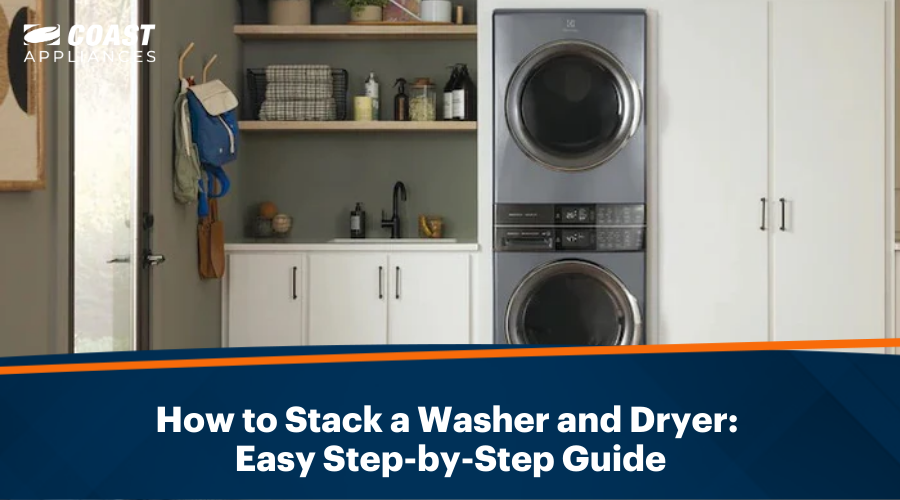
If you’re working with a small laundry room, condo, or apartment, learning how to stack washer and dryer units can be a smart way to save space without sacrificing convenience. Stacking appliances allows you to take advantage of vertical space, making your laundry area more organized and functional.
Modern stackable laundry systems are designed to work safely together using a stacking kit that secures the dryer on top of the washer. Whether you’re planning a renovation or simply looking to maximize your laundry room layout, stacking can be a practical and efficient solution.
Dimensions Needed, Necessary Tools and Materials
Before learning how to stack a washer and dryer, it’s important to confirm that your appliances are compatible and that you have the correct tools. Most stackable units are front-load machines designed specifically for vertical installation.
Typical stacked washer dryer dimensions range from 27 to 28 inches wide, with a combined height of 70 to 80 inches, depending on the models.
Tools and materials you may need:
-
Manufacturer-approved stacking kit
-
Screwdriver or drill
-
Level tool
-
Measuring tape
-
Anti-slip pads (optional but helpful)
-
Installation manual for both appliances
Using the proper stacking kit is essential because it locks the dryer securely onto the washer and prevents movement during operation.
How to Stack a Washer and Dryer
If you’re wondering can I stack my washer and dryer, the answer depends on compatibility. In most cases, front-load washers paired with stackable dryers from the same brand work best.
Follow these steps to safely stack your appliances.
Step 1: Confirm compatibility
Check the manufacturer’s specifications to ensure your washer and dryer models are designed for stacking.
Step 2: Measure the laundry space
Verify the available space and ensure there is enough clearance for ventilation, plumbing connections, and door access.
Step 3: Install the stacking kit on the washer
Attach the brackets from the stacking kit to the top of the washer according to the manufacturer’s instructions.
Step 4: Lift the dryer onto the washer
With the help of another person, carefully lift the dryer and position it on top of the washer.
Step 5: Secure the dryer to the stacking kit
Fasten the dryer to the brackets so it remains stable during operation.
Step 6: Check that the appliances are level
Use a level tool to ensure both machines sit evenly. Adjust the washer’s feet if necessary.
Step 7: Reconnect utilities and test the machines
Reconnect water hoses, drainage lines, and power sources before running a short test cycle.
Proper installation ensures safe operation and prevents vibration or noise during laundry cycles.
Safety Precautions and Installation Tips
Stacking laundry appliances is generally safe when done correctly, but there are a few important precautions to keep in mind.
Key safety tips include:
-
Always place the washer on the bottom and the dryer on top
-
Use the manufacturer-approved stacking kit only
-
Ensure the washer is fully level before stacking
-
Avoid stacking mismatched brands or incompatible models
-
Leave proper ventilation space around the dryer
-
Secure hoses and cables to prevent pulling or strain
-
Do not attempt stacking without assistance
Following these guidelines helps prevent instability, excess vibration, and potential damage to your appliances.
Pros and Cons of Stacking Washer and Dryer
Before deciding whether stacking is right for your home, it’s helpful to consider the advantages and disadvantages of stacking washer and dryer units.
| Pros | Cons |
| Saves valuable floor space | Dryer may be difficult to reach for shorter users |
| Commercial Descaler | Installation may require two people |
| Keeps laundry area organized | Limited access for maintenance |
| Creates space for storage cabinets | Some models require stacking kits |
| Modern stackable units are highly efficient | Slightly more vibration if not installed correctly |
For many households, the space-saving benefits outweigh the drawbacks, especially in smaller homes or apartments.
Troubleshooting Common Stacking Issues
Even when installed correctly, stacked appliances may occasionally experience minor issues. Fortunately, most problems are easy to resolve.
One common concern is excessive vibration or noise. This often happens when the washer is not perfectly level. Adjusting the leveling feet or placing anti-vibration pads underneath the washer can improve stability.
Another issue may be appliance shifting during spin cycles. If this occurs, double-check that the stacking kit brackets are properly secured and tightened. Over time, screws may loosen due to vibration.
Some homeowners also notice that stacked units feel harder to access, especially when loading the dryer. Installing a small step stool or choosing models with easy-reach controls can make the setup more user-friendly.
If you continue to experience problems, consulting the manufacturer’s manual or professional installer may help ensure everything is functioning safely.
Stackable Washers and Dryers
Browse our full selection of Stackable Washers and Dryers.
How To Stack Washer and Dryer - FAQs
How wide is a standard stackable washer and dryer?
Most stackable laundry units are between 27 and 28 inches wide, although compact models may be closer to 24 inches wide.
Can any washer and dryer be stacked, or are there specific models?
Not all machines are stackable. In most cases, only front-load washers paired with compatible dryers and stacking kits are designed for vertical installation.
What should I do if my stacked washer and dryer are unsteady?
Check that the washer is level, confirm the stacking kit is properly secured, and consider using anti-vibration pads to stabilize the appliances.
Are there specific brands that recommend certain stacking kits?
Yes. Most manufacturers design stacking kits specifically for their own models to ensure safe installation and proper alignment.
What is the ideal height for a stacked washer and dryer for accessibility?
The total stacked height typically ranges from 70 to 80 inches, so ensure the controls and dryer door remain comfortable to reach for daily use.