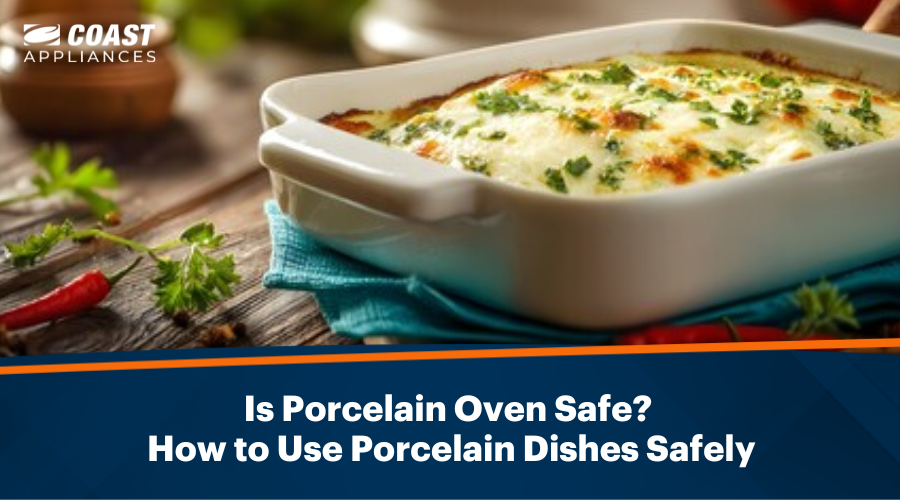
Porcelain is a staple in many kitchens, valued for its elegant appearance, durability, and versatility. From baking dishes to serving platters, porcelain cookware is often used for both everyday meals and special occasions. But a common question remains: is porcelain oven safe, and can it handle the heat without cracking or breaking?
Understanding whether porcelain can go in the oven is essential for protecting your cookware, and your meals. Using the wrong dish at high temperatures can result in thermal shock, cracks, or even complete breakage. In this guide, we’ll break down what porcelain is, how it’s made, which types are oven-safe, and best practices to ensure safe use in your oven.
In this article, we’ll cover:
Types of Porcelain Cookware and Dishware
Before determining whether porcelain can safely be used in the oven, it’s important to understand that porcelain is not a single, uniform material. The term “porcelain” covers several types of cookware and dishware, each produced differently and designed for specific uses.
Some are engineered for high-heat cooking, while others prioritize appearance over performance.
Knowing which type you own can make the difference between a successful bake and a cracked dish. Factors such as firing temperature, thickness, and whether the porcelain is pure or coated all influence oven safety.
Common Types of Porcelain:
| Type of Porcelain | Description | Oven Safe? |
| Pure Porcelain | Fired at extremely high temperatures, dense and non-porous | Yes (check manufacturer limits) |
| Porcelain-Coated Stoneware | Clay base with porcelain enamel coating | Usually, within temperature limits |
| Porcelain-Coated Metal | Metal cookware with porcelain enamel | Yes, often very heat-resistant |
| Decorative Porcelain | Designed mainly for serving or display | Not recommended |
Some porcelain dishware is designed only for serving, not cooking. Always check manufacturer guidelines before use.
Temperature Limits and Safety Guidelines
Even when porcelain is labelled oven-safe, temperature limits still matter. Porcelain handles heat differently than metal or glass, and exceeding recommended temperatures can weaken the material over time. More importantly, rapid temperature changes can cause thermal shock, leading to sudden cracking or breakage.
Understanding how hot porcelain can safely get, and how to heat it gradually, helps preserve cookware and ensures safe cooking results. This is especially important when using modern ovens with powerful heating elements and convection settings.
Porcelain Temperature Thresholds
| Porcelain Type | Typical Safe Temperature |
| Pure Porcelain | Up to 260°C (500°F) |
| Porcelain-Coated Stoneware | 220–260°C (425–500°F) |
| Porcelain-Coated Metal | Up to 315°C (600°F) |
| Decorative Porcelain | Not recommended |
Avoiding Thermal Shock
Thermal shock occurs when porcelain experiences sudden temperature changes, such as moving directly from the fridge into a hot oven. This can cause cracking, even if the dish is labelled oven-safe.
Can Porcelain Go in the Oven?
Many people ask, can porcelain go in the oven, and the short answer is yes, but only when it’s specifically designed for oven use. Unlike cookware made entirely of metal, porcelain relies on even heat distribution and gradual temperature changes to perform safely.
Because porcelain pieces vary so widely, it’s essential to verify oven safety before use. Manufacturers usually include symbols, stamps, or care instructions that indicate whether a dish is suitable for oven cooking.
How to Check if Porcelain Is Oven Safe
-
Check the bottom of the dish for an “oven-safe” symbol or temperature rating
-
Review the manufacturer’s website or packaging for heat limits
-
Avoid porcelain with metallic trim, which can react poorly to heat
-
Look for uniform thickness, as thin porcelain is more prone to cracking
-
When unsure, start with low temperatures and increase gradually
Even oven-safe porcelain should never be placed directly on a stovetop burner or under a broiler unless explicitly stated.
Best Practices for Using Porcelain in the Oven
Even oven-safe porcelain benefits from careful handling. Small habits, such as how you preheat your oven or cool your dish after baking, play a major role in preventing damage. Using porcelain correctly not only improves safety but also extends the lifespan of your cookware.
Following these best practices is especially important in high-performance ovens that reach cooking temperatures quickly and maintain intense, even heat.
Safe Porcelain Oven Use Tips
-
Always place porcelain dishes into a cold or pre-warming oven
-
Avoid transferring porcelain directly from freezer or fridge to oven
-
Never expose porcelain to direct flames or stovetop burners
-
Use oven mitts to prevent sudden impacts when removing dishes
-
Allow porcelain to cool naturally before washing
-
Avoid using damaged or hairline-cracked porcelain in the oven
These steps help prevent cracking, extend the lifespan of your cookware, and ensure safe baking results.
Oven
Browse our full selection today.
FAQs on Is Porcelain Oven Safe
Can porcelain go directly from the refrigerator to the oven?
No. Sudden temperature changes can cause thermal shock. Let porcelain reach room temperature first.
What is the highest temperature that porcelain can withstand?
Most oven-safe porcelain can handle up to 260°C (500°F), but always check manufacturer guidelines.
How can you repair cracked porcelain cookware?
Unfortunately, cracked porcelain cannot be safely repaired for oven use and should be replaced.
Is it safe to put vintage porcelain dishes in the oven?
Generally no. Vintage porcelain may not be designed for modern oven temperatures and can crack or shatter.